Driven by both globalization and infrastructure demand in emerging markets, China's container house exports are experiencing explosive growth. Industry data indicates that between 2025 and 2030, the Chinese container house market will continue to expand at an average annual rate of 15%, expected to exceed 200 billion RMB by 2030. Overseas markets will become a key growth engine—export value is projected to account for 30% of the total market share, with regions like Southeast Asia and Africa emerging as the most promising growth markets.
Technological Upgrades Reshape Export CompetitivenesThe industry has deeply transformed from traditional manufacturing towards intelligent, green, and modular directions:
Widespread Smart Systems:Penetration of IoT and remote monitoring technologies exceeds 35%, enabling container houses with intelligent management functions like energy consumption optimization and environmental control, significantly boosting usage efficiency.
Breakthroughs in Green Materials:Usage rate of eco-friendly materials surpasses 30%, solar power supply systems become standard, reducing single-unit energy consumption by over 40%.
Flexible Production Capabilities: 3D printing technology drives customized production, with exports of special-function units (e.g., refrigerated containers, medical cabins) growing at an average annual rate of 25%.
These technological innovations allow Chinese products to demonstrate exceptional adaptability in diverse climates—from the hot and dry conditions of Saudi Arabia to the humid and rainy environments of Southeast Asia—directly driving growth in overseas orders.
Emerging Markets Become Primary Export Destinations
The urbanization process in countries along the "Belt and Road" initiative has created unprecedented market opportunities:
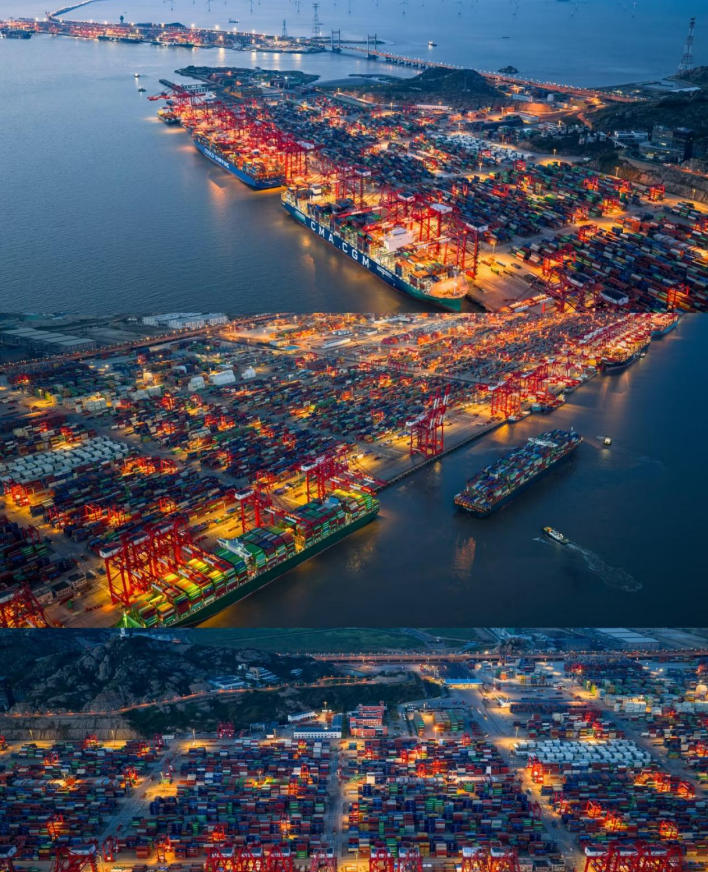
Southeast Asia Logistics Infrastructure: Regional port expansion plans have spurred massive demand for temporary storage. Container house imports in this region grew 22% year-on-year in 2025.
Africa's Housing Revolution: Facing a shortage of 200 million housing units, container houses have become the preferred solution for livelihood projects, offering 70% faster construction speed and 60% cost advantage compared to traditional buildings.
Explosive Demand in the Middle East: Saudi Arabia's prefabricated housing market is set to exceed $6 billion by 2030. Chinese products, with their energy-saving features (35% lower cooling energy consumption in high-temperature environments), are capturing a core share.
Empowerment from Policy and Logistics
A continuously optimized external environment paves the way for Chinese exports:
Reduced Trade Barriers:Since RCEP took effect, container shipping volume on China-ASEAN routes has increased 15% annually, with tariff costs decreasing by approximately 8%.
Upgraded Cross-border Logistics:** The share of container volume transported via China-Europe Railway Express has risen to 18%, with transit time compressed to 15 days. Coupled with the construction of overseas warehouses for cross-border e-commerce, this drives an average annual export growth rate of 25%.
Alignment with Green Standards: The EU's Carbon Border Adjustment Mechanism (CBAM) pushes industry upgrades. Leading companies are adopting solutions like hydrogen-powered logistics to offset the increased carbon cost of 800-1200 RMB per unit.
Future Landscape and Challenges
The industry is undergoing profound transformation:
Product Structure Evolution: By 2030, intelligent container houses will hold a 40% market share, green and eco-friendly types will account for 35%, while traditional products will shrink to 25%.
Carbon Tariff Pressure:New EU regulations may increase export costs by 15%, forcing low-carbon transformation across the entire industry chain.
Geopolitical Risks: Fluctuations in shipping routes like the Red Sea have caused freight rates to surge by 30%, but the resilience of global trade continues to support fundamental growth.
Where standardization meets personalization, and steel boxes carry intelligent cores, China's container house exports have transcended simple product trade, becoming a systematic export of infrastructure capability and innovative ideas. In the next five years, the industry will shift from scale competition to value competition—technological density will determine market height, and green credentials will shape global influence. On this new journey of 'steel-structure globalization', Chinese manufacturing is using modular construction as a lever to revolutionize global living and storage solutions.