In the hustle and bustle of urban life, finding a unique place to relax has become a simple pleasure for modern city dwellers. The container café stands out as precisely such a multidimensional architectural masterpiece, blending creativity and leisure.
Unique Aesthetic Design
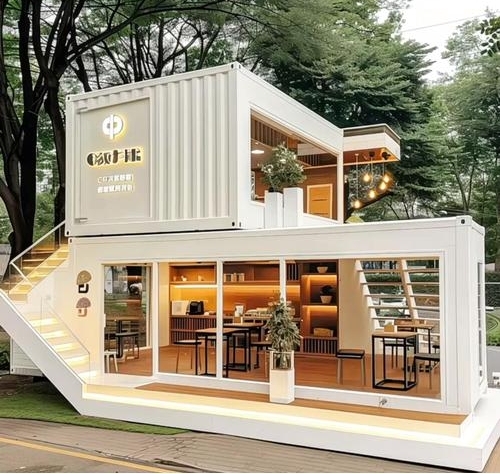
Container cafés capture attention with their distinctive, stylish exteriors. These leisure spaces, transformed from retired shipping containers, not only showcase the unique appeal of industrial aesthetics but also skillfully integrate modern concepts of relaxation. As standardized units in global logistics, shipping containers are robust, portable, and easily reconfigured. These very characteristics make them a building material with great potential, offering architects and designers a broad canvas for creativity.
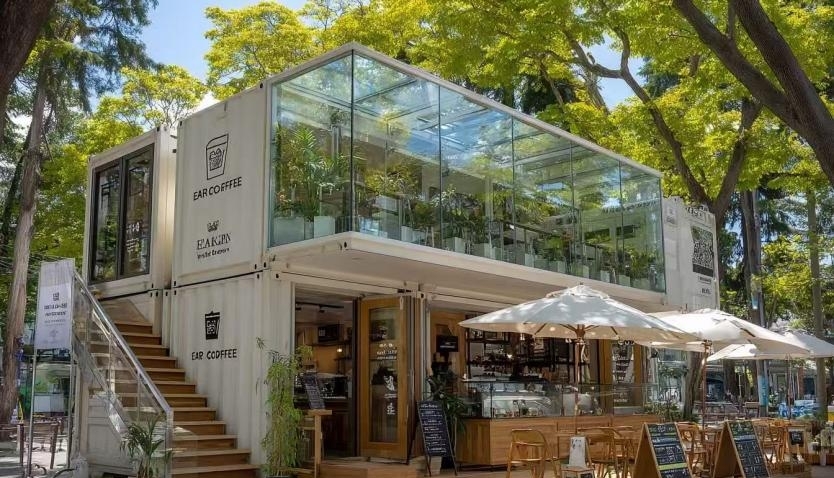
Through processes like cutting, joining, and painting, designers turn originally monotonous containers into vibrant, personalized leisure spaces. The metal shell and clean, angular lines of the containers impart a unique industrial charm to the café, allowing patrons to appreciate the substance and appeal of industrial culture while enjoying their coffee.
Flexible Spatial Layout
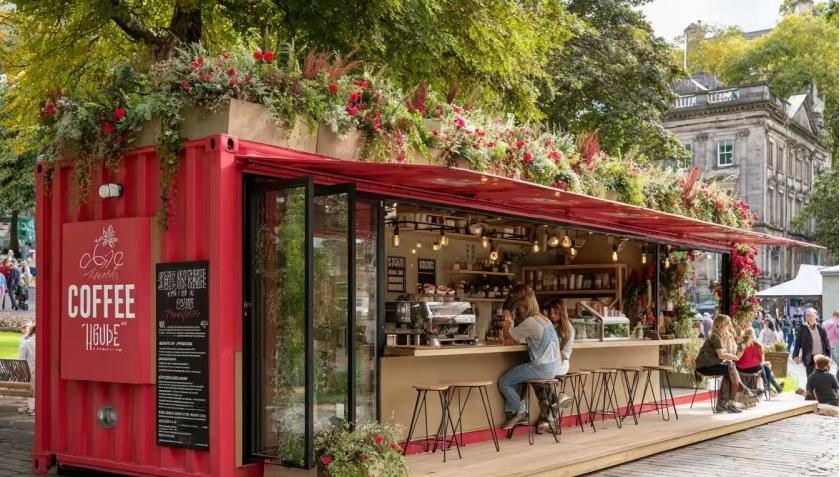
Container cafés typically feature adaptable spatial divisions and diversified functional zones—such as the bar counter, seating area, and storage space—to cater to different customer needs. Many also incorporate outdoor spaces like terraces or viewing decks, letting customers enjoy city views along with their coffee.
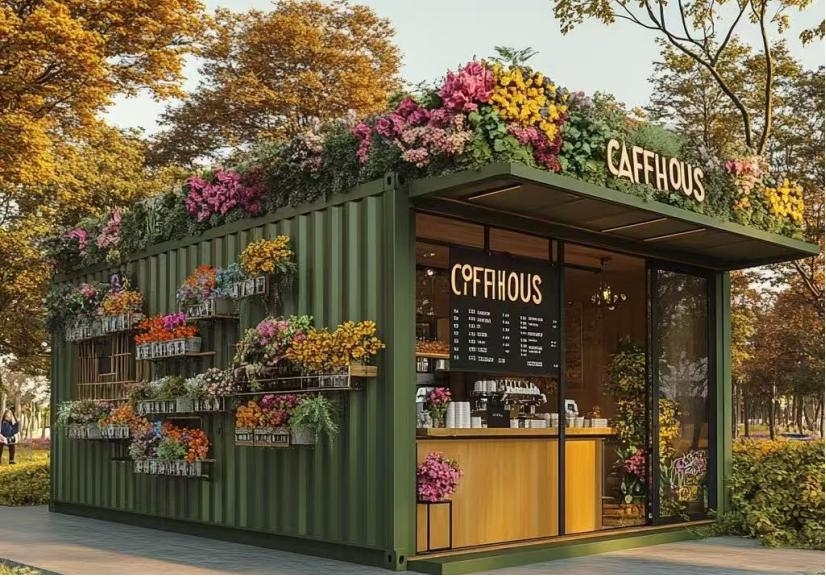
For instance, some container cafés integrate greenery and natural elements into their design, creating a warm and cozy atmosphere. Whether for reading, chatting, or simply savoring a rich cup of coffee alone, these spaces meet diverse needs.
Rapid Construction and Low-Cost Operation
Compared to traditional cafés, container cafés can be built much faster. They are often prefabricated in factories and require only simple installation and finishing upon arrival at the site. This approach not only reduces construction waste but also saves significant time, allowing projects to launch more quickly.
Furthermore, the cost of building a container café is considerably lower than that of a conventional brick-and-mortar shop. Even in terms of land lease, their compact structure offers advantages in saving space and resources. This lower barrier to entry enables more small and medium-sized enterprises, as well as individuals, to participate in this field, fostering the popularization and development of container cafés.
A Model of Sustainable Development
Container cafés also embody the principles of sustainable development. Companies like Starbucks have utilized retrofitted containers for their stores to minimize environmental impact. This operational model maximizes resource efficiency and reduces waste generated during construction.
As environmental awareness and innovative design continue to deepen, the future prospects for container cafés are vast. They will continue to play a significant role in urban leisure culture, offering city residents more diverse and personalized options for relaxation. Moreover, container cafés can integrate with other industries—such as culture, art, and tourism—forming new models of cross-sector collaboration.
Promotion Strategies and Future Outlook
To attract customers and provide a unique experience, container cafés can employ various promotional strategies. These include marketing through social media platforms, hosting themed parties or live music events, and inviting influencers or celebrities to share their experiences and stories related to the space. Such activities effectively boost brand visibility and influence.
Looking ahead, container cafés could incorporate technological elements like facial recognition payment systems or smart ordering robots to enhance the customer experience. They could also offer more personalized services, such as customized products or value-added packages, to meet diverse consumer demands.
In summary, with their distinctive industrial aesthetic, comfortable modern leisure experience, high flexibility, and creativity, container cafés are gradually becoming a new favorite in urban leisure culture. For architects, designers, and everyday consumers alike, the container café represents an exploration and innovation in contemporary urban lifestyle.