The Level 5 fire in Hung Fuk Court, Tai Po, Hong Kong has caused serious casualties, leaving over 1900 households homeless. In the post disaster resettlement of residents, a rapidly constructed transitional housing played a crucial role.
Urgent needs for disaster relief and resettlement
At the end of November 2025, a sudden fire engulfed Hung Fuk Court in Tai Po, Hong Kong. The fire not only caused significant casualties, but also caused over 1900 households to instantly lose their homes. On the night of the fire, the Housing Bureau of the Hong Kong Special Administrative Region Government urgently counted 1400 units to provide resettlement options for the affected people.
As of December 6th, 1403 residents have moved into youth dormitories or hotel rooms, and another 2599 residents have moved into government coordinated transitional housing.
Faced with such a huge demand for resettlement, traditional buildings find it difficult to respond quickly. At this point, container houses, with their unique advantages, have become an important solution for post disaster reconstruction.
The core advantages of container houses in post disaster resettlement
Container houses are innovative structures that repurpose standard containers for living or working spaces. These modern residences are not only environmentally friendly, but also very durable, making them an excellent choice for temporary or permanent housing. In post disaster resettlement, container houses have demonstrated multiple core advantages.
Its biggest advantage lies in its fast construction, with an average of 4 workers completing a single box installation in 3 hours. At the same time, container houses are sturdy and durable, able to withstand harsh weather conditions, and have a service life of over 15 years. Cost effectiveness is also a significant characteristic. Compared to traditional buildings, the construction cost of container houses is significantly reduced, and transportation and installation are also extremely convenient.
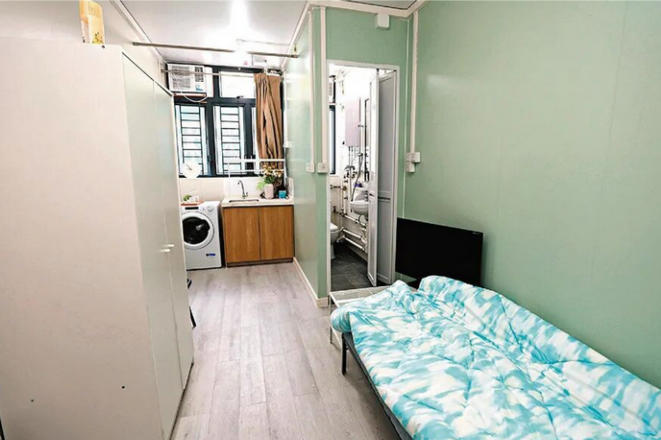
In the resettlement practice in Hong Kong, these houses have complete internal facilities, reasonable functional zoning, and can meet basic living needs. There is usually a water table in the room for cooking, equipped with a TV, dining table, wardrobe, etc. The bed in the bedroom has also been made.
Efficient performance in practical applications
In the post disaster resettlement work, the SAR government actually applied the container house plan. These transitional houses are not simple temporary shelters, but fully functional short-term homes.
Each house is equipped with basic facilities such as independent toilets, bathrooms, and kitchens, and there is no need to pay rent or utility fees when moving in. Furniture and household appliances such as televisions, sofas, and refrigerators are also readily available, with ample reserves of various materials, clothing, food, and more. Taking Aunt Zhang as an example, she and her family were placed in the transitional housing "Ce Cheng Xuan" of about 30 square meters, which is fully equipped with furniture and household appliances. She said, "This is very good."
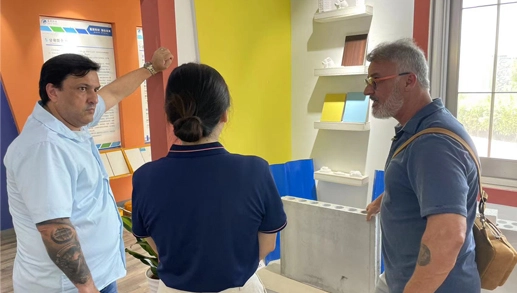
For the fire safety issues that residents are most concerned about, these container houses use fire-resistant rock wool boards as wall materials to achieve better insulation effects and comply with strict building standards and safety regulations.