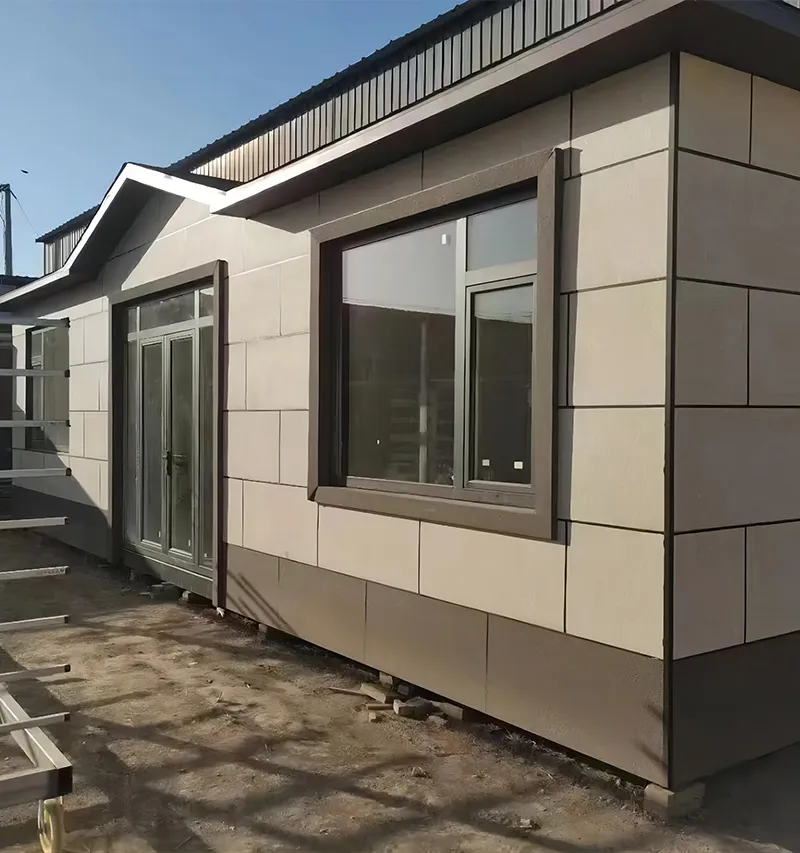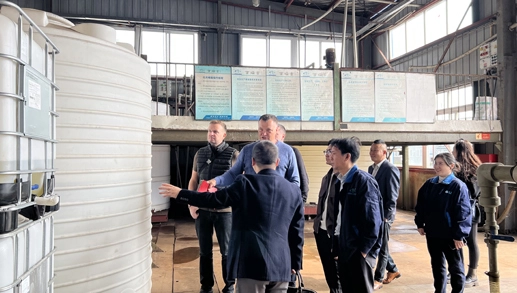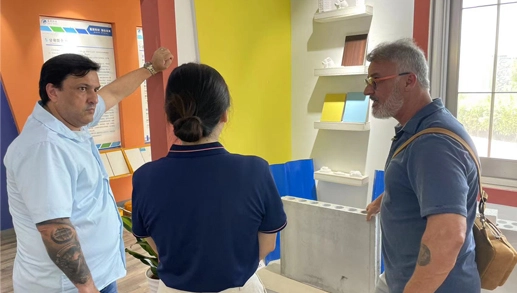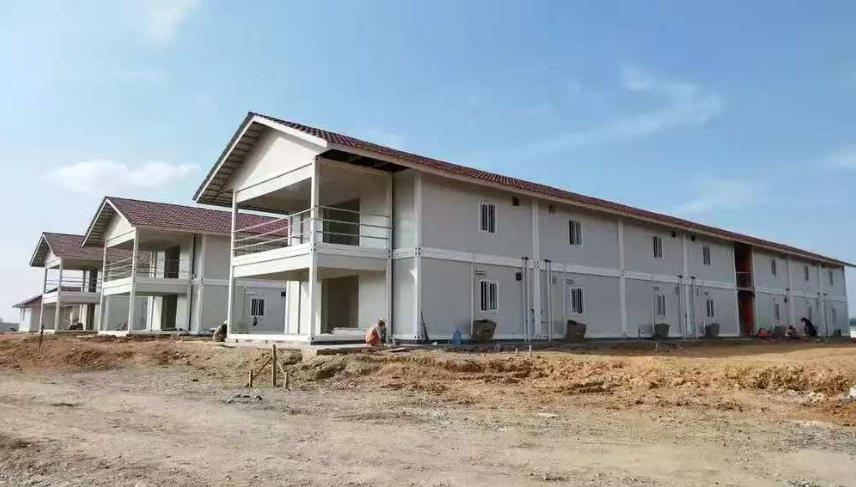
In today's rapidly evolving construction industry, on-site container houses are increasingly becoming the preferred choice for temporary structures. This innovative construction method not only surpasses the traditional prefabricated housing model but has also gained market recognition due to its unique strengths. This article will provide an in-depth analysis of the five core advantages of on-site container houses, helping you understand why an increasing number of engineering projects are adopting this efficient and economical temporary building solution.
I. Analysis of Core Advantages
Compared to traditional prefabricated houses, the most prominent advantage of on-site container houses lies in their exceptional durability. Standard containers are constructed from weathering steel, capable of withstanding various harsh weather conditions, including strong winds, heavy rain, and even minor seismic activity. Statistical data indicate that high-quality container houses can have a service life of 15–20 years, which is three to four times longer than that of traditional prefabricated houses. This durability translates directly into long-term cost savings, making them particularly suitable for large-scale projects with extended timelines.
Another standout feature is their flexibility and modular design. A single container serves as a complete spatial unit, and through horizontal or vertical combinations, temporary building complexes of various scales can be rapidly assembled. Reports from leading construction companies show that utilizing container offices can reduce installation time by 40% compared to traditional temporary structures—a critical advantage for projects with tight schedules. The modular nature also allows for flexible spatial reconfiguration according to project progress, optimizing resource utilization.
II. Environmental Features and Sustainability
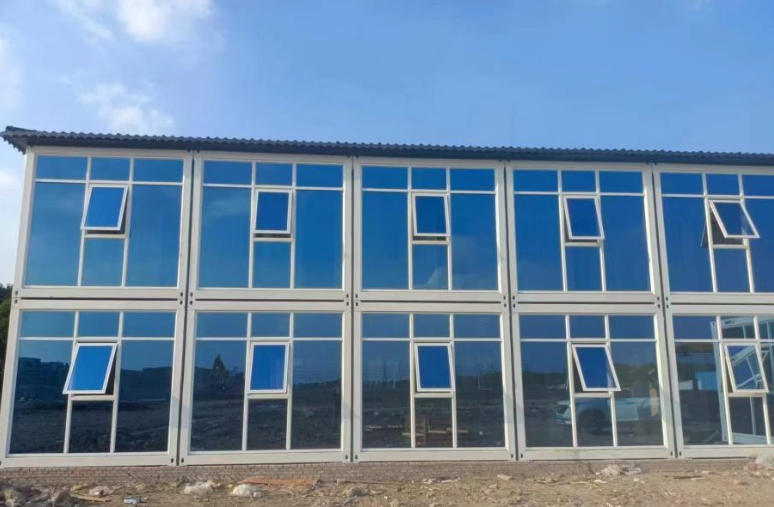
As environmental awareness grows, the eco-friendly attributes of container houses have become a significant factor in their market competitiveness. Most container houses are manufactured using recycled steel. According to data from the International Container Association, reusing a single container can save approximately 8,000 kWh of electricity and reduce carbon dioxide emissions by 7.5 metric tons. This "waste-to-resource" model aligns seamlessly with circular economy principles, enabling such temporary structures to qualify for credits under green building certification systems like LEED.
The energy efficiency of container houses is equally noteworthy. Through the integration of insulation layers, double-glazed windows, solar panels, and other features, modern container houses can reduce energy consumption by over 50% compared to conventional temporary buildings. Operational data from a construction site in Shanghai demonstrated that energy-optimized container offices decreased summer cooling electricity usage by 63% and winter heating costs by 58%, resulting in annual energy savings exceeding CNY 20,000.
In terms of material efficiency, container buildings achieve a near-total material recovery rate. Upon project completion, containers can be relocated in their entirety for reuse at new sites or disassembled with a steel recovery rate of up to 98%. In contrast, the material recovery rate for prefabricated houses typically does not exceed 70%, and their residual value is considerably lower. This efficient use of resources solidifies the position of container houses as a genuinely sustainable temporary construction solution.
III. Analysis of Safety Performance
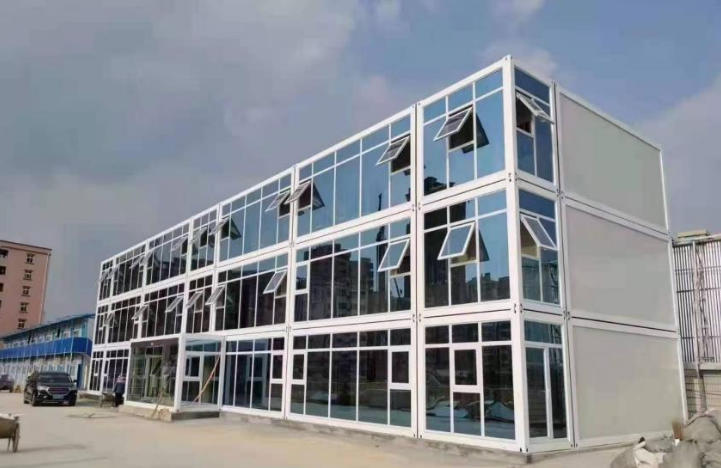
Safety remains the paramount concern for temporary site structures, and container houses excel in this domain. Their structural resilience originates from the inherent design of shipping containers, which can support stacking of five to eight layers and withstand wind forces exceeding Level 12. During Typhoon Lekima in 2019, container houses at a coastal construction site in Zhejiang Province remained fully intact amidst 10-level winds, whereas 70% of the concurrently installed prefabricated houses sustained damage—a clear testament to their structural superiority.
Regarding fire resistance, professionally modified container houses significantly outperform traditional temporary buildings. Units equipped with rock wool insulation and fire-retardant coatings can meet national Class A fire safety standards, reducing fire hazard risks by over 80%. Fire safety tests conducted on container offices indicated a duration of 45 minutes from ignition to full combustion, providing ample time for evacuation, compared to a mere 15–20 minutes for standard prefabricated houses.
IV. Advantages in Rapid Deployment
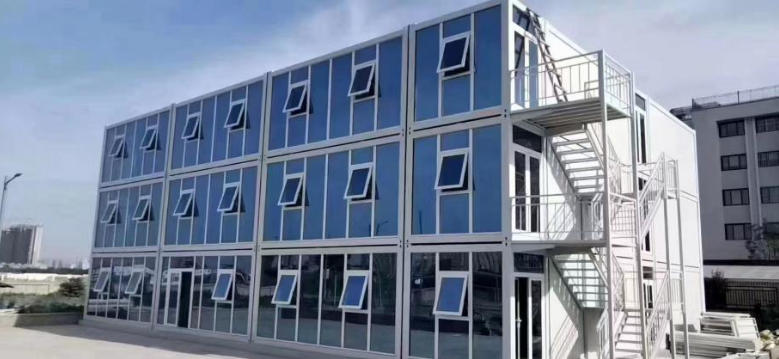
Time efficiency is a key reason why project managers favor container houses. They enable remarkably swift deployment, often achieving "same-day delivery and readiness for use." Documentation from a Chengdu subway project revealed that the hoisting, positioning, and foundation connection for 30 container offices were completed within just eight hours, whereas assembling prefabricated houses of equivalent scale required five days. This rapid deployment capability proves invaluable for emergency response projects and those operating under stringent deadlines.
The installation process is notably straightforward, reducing on-site construction complexity. Specialized construction teams are unnecessary, as standard crane operators can perform the basic installation. A contractor in Shenzhen shared that a trained six-person crew can assemble ten containers within a single day, reducing labor costs by 60%. Furthermore, installation can proceed under almost any weather condition, including rainfall, thereby ensuring uninterrupted project progress.
Container houses demonstrate exceptional adaptability to diverse terrains. With minimal foundation preparation, they can be installed on mountainous landscapes, soft soil, or uneven ground. A hydropower station project in Tibet successfully deployed a container camp at an altitude of 4,500 meters, underscoring their capability to function in extreme environments. This versatility significantly reduces the time and cost associated with preliminary site preparation.
V. Multifunctional Application Scenarios
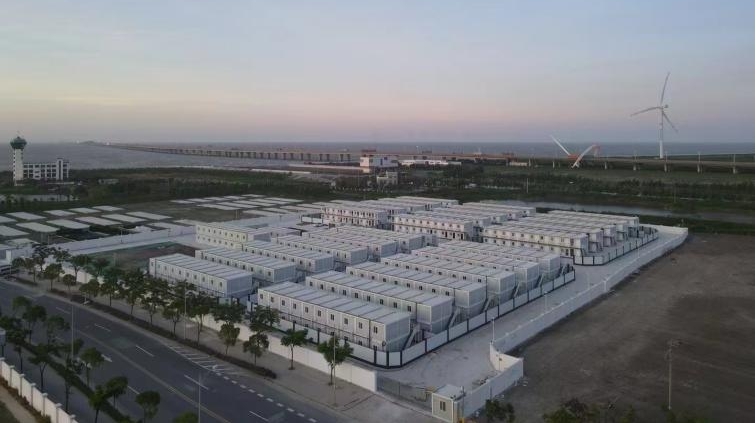
Container houses have evolved beyond basic accommodation to serve a wide array of functions. Professionally designed container units can fulfill requirements for offices, meeting rooms, storage facilities, shower areas, kitchens, and more. In a commercial complex project in Wuhan, interconnected containers were innovatively used to construct a comprehensive temporary community—complete with a project management center, worker training school, and medical station—whose functional completeness rivaled that of permanent buildings.
Customization options further broaden their application scope. Through specialized design, containers can be modified into equipment rooms, laboratories, or storage spaces for precision instruments. A semiconductor factory project in Hangzhou successfully converted containers into cleanrooms that met all production standards for temperature, humidity, and particulate control, at merely 20% of the cost of traditional cleanroom construction. This high degree of customizability greatly extends the potential applications of container houses.
In terms of industry applicability, container houses are now widely employed in construction, municipal engineering, petroleum, power generation, mining, and numerous other sectors. Their role in emergency projects is particularly noteworthy. For instance, during the construction of the Wuhan Huoshenshan Hospital in 2020, the rapid deployment of container ward modules was crucial for gaining precious time in pandemic response efforts. With ongoing design innovations, container houses are transitioning from purely temporary structures to semi-permanent building solutions, indicating expansive future market prospects.
Conclusion
When evaluated comprehensively for durability, cost-effectiveness, safety, convenience, and versatility, on-site container houses undoubtedly represent a prudent choice for temporary structures in modern engineering projects. As technology continues to advance, these units will become increasingly intelligent and comfortable, incorporating features such as IoT-based monitoring systems and renewable energy integration. It is recommended that project managers consider not only the initial investment but also the full lifecycle value when selecting temporary building solutions. In this respect, container houses offer unparalleled advantages as a genuinely efficient, economical, and sustainable temporary construction solution.